Thursday 4th June 2026
Know it, Question it, Use it Wisely
A nationwide day for schools, students, and parents to explore AI together.
What is AI Awareness Day?
National AI Awareness Day (4th June 2026) is a new nationwide campaign designed to build AI literacy across UK schools. The model is simple: schools commit to running just one activity.
Our goal is to create a unified moment where the entire education community comes together to engage positively and critically with AI — preparing the next generation for a world increasingly shaped by intelligent technology.
500,000 reach so far
The support for AI Awareness Day 2026 is growing fast. With schools now signing up across the UK, we estimate we're already reaching over 500,000 students and we're confident we'll hit 1 million in the coming months. We're thrilled to welcome our interested schools, charities, and partners. Together, we're building a national movement.

28,000 students annually
AI resources ↗
115,000 primary teachers have accessed Barefoot
AI resources ↗
AI resources ↗
Nationwide Network of Computing Educators
AI resources ↗
Over 6.5 million young people have been reached through NCCE-supported programmes.
AI resources ↗
Works with over 19,000 schools, every local authority in the country
AI resources ↗
AI resources ↗
AI resources ↗
Computing CPD and resources for teachers and leaders
AI resources ↗
Supports approximately 270,000 teachers annually
AI resources ↗
295,000 children directly reached in UK Classrooms
AI resources ↗
Over 250 UK schools, colleges, and Multi-Academy Trusts (MATs) have entered the certification pipeline
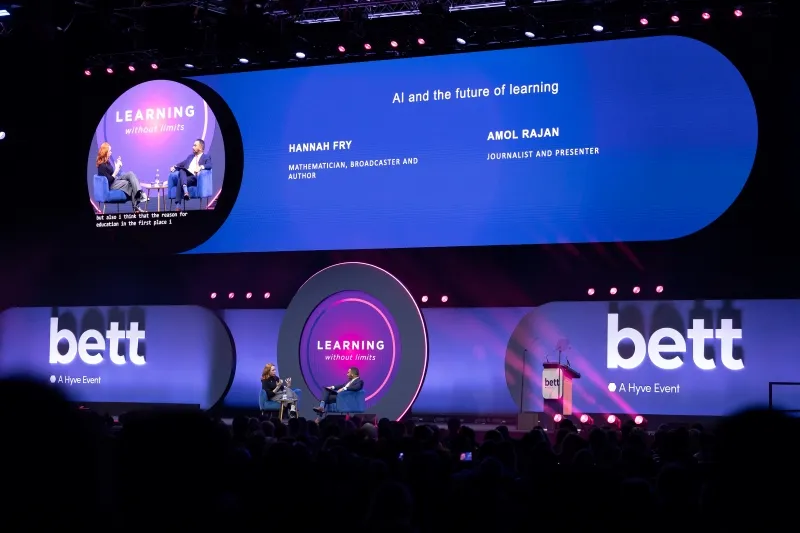
The world’s biggest education technology event
Black and Global Majority-led community initiatives and the room where AI policy, regulation, and power are shaped.
36 schools across Surrey, Hampshire and South London.
London's largest Further Education college 32,000 students
400 businesses in Central London
20 schools across Bedfordshire and Luton
38 academies, 25,000 students
Alternative Provision Free School (Academy)
50 schools, 33,000 students
15,000+ tech leaders
20,000 tech professionals
Transformational Youth Entrepreneurship For All
Digital strategy and delivery consultancy
Join the campaign
Complete form to join movement
Live Streams
There are many ways to engage with AI Awareness Day. We have planned live streams across different age groups, themes, and topics.
-
13:00 – 13:45
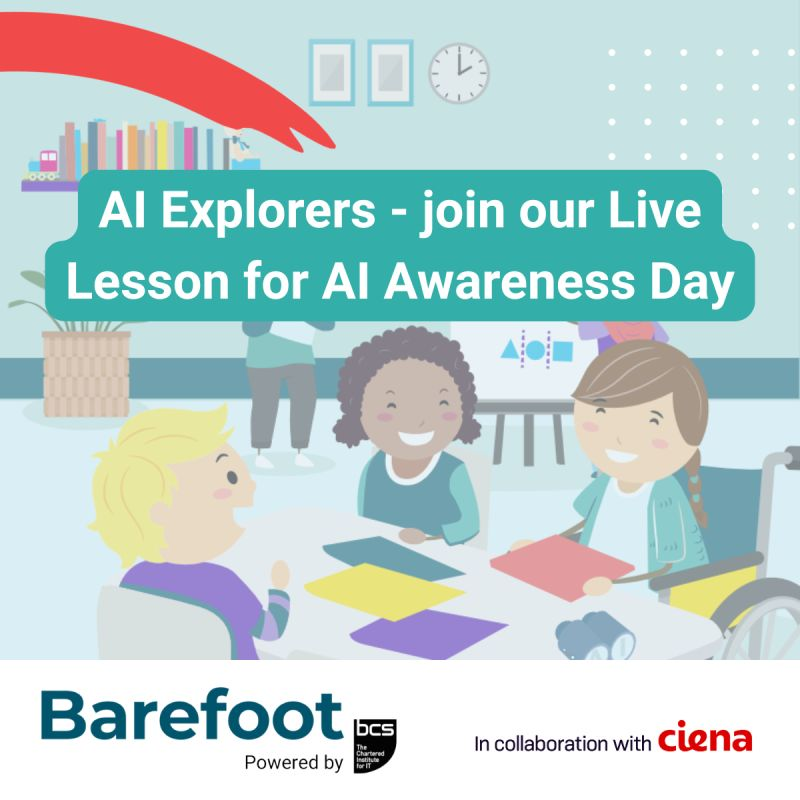
AI Explorers Live Lesson – Level 1 (Ages 5–7)
KS1
Barefoot Computing
-
16:00 – 17:00
Raising AI Awareness for KS4 teachers
KS4
STEM Learning
-
14:00 – 14:55
AI Explorers Live Lesson – Level 2 (Ages 7–11)
KS2
Barefoot Computing
Campaign Updates
Artificial Intelligence (AI) is transforming how children learn, create, and play. With the UK’s inaugural National AI Awareness Day arriving this Thursday, 4 June 2026, there is no better time to help your child navigate this technology.
Here are five practical tips for UK parents to keep screen time safe, ethical, and highly rewarding.
1. Master the “Art of Prompting” Together
AI tools do not just look up information; they generate completely unique responses based on the specific instructions (prompts) they are given. Teaching your child how to write a great prompt is the ultimate future-proof skill, transforming AI from a lazy shortcut into a powerful brainstorming partner.
The Strategy: Teach your child the C.R.E.A.T.E. prompt framework to get high-quality, educational results instead of simple copy-and-paste answers.
The C.R.E.A.T.E. Framework to Teach Your Child:
- C – Character: Tell the AI who it should act as (e.g., “Act as a space astronaut” or “Act as an expert math teacher”).
- R – Request: Clearly state what you want it to do (e.g., “Explain how gravity works”).
- E – Examples: Give it context if needed (e.g., “Use an analogy about a trampoline”).
- A – Audience: Tell the AI who the response is for so it uses the right language (e.g., “Explain it to an 8-year-old”).
- T – Type: Choose the format of the output (e.g., “Write it as a short story” or “Create a 3-item bulleted list”).
- E – Engage: Add an interactive twist (e.g., “End with a quiz question to see if I understood”).
- Try These Prompt Examples Together Tonight:
- For Homework Help: Instead of “Give me the answers to my fractions homework,” try: “Act as a patient math tutor. Give me a step-by-step hint for solving this fraction problem, but don’t tell me the final answer. Let me try to solve it first.”
- For Creative Writing: Instead of “Write a story about a dragon,” try: “Let’s write a choose-your-own-adventure story about a dragon. Write the first paragraph, then stop and give me three choices for what my character should do next.”
- For Curiosity: Instead of “Why is the sky blue?” try: “Act as a funny scientist. Explain why the sky is blue using simple words that a primary school student can understand, and include one silly joke about weather.”
- For Homework Help: Instead of “Give me the answers to my fractions homework,” try: “Act as a patient math tutor. Give me a step-by-step hint for solving this fraction problem, but don’t tell me the final answer. Let me try to solve it first.”
2. Set Up Age-Appropriate Safety Guardrails
Most major AI models require users to be at least 13 years old. Protect your child’s data privacy and prevent exposure to inappropriate content.

- The Strategy: Use family safety settings and dedicated kid-friendly AI interfaces.
- Try This: Explore official UK resources from Parent Zone or use Minecraft Education’s AI modules via BBC Bitesize. Ensure your children never type personal details like their full name, school, or address into an AI chat box.
3. Teach the “Fact-Check” Habit
AI models are prediction engines. They guess the next logical word based on data patterns, which means they can confidently make up false information (known as “hallucinations”).
- The Strategy: Build digital literacy by encouraging a healthy sense of skepticism.
- Try This: Turn fact-checking into a game. Ask your child to look up a topic they know well, find one error the AI made, and verify the correct information using a trusted UK source like BBC Bitesize or encyclopedias.
4. Co-Explore Creative AI Tools
AI is not just about text; it can generate music, art, and code. Exploring these tools together removes the mystery and keeps the activity transparent.
- The Strategy: Use AI to spark imagination and lower the barrier to entry for complex hobbies.
- Try This: Sit down together and use an image generator (like Adobe Firefly, which is trained on safe, licensed data) to bring a story your child wrote to life. Discuss how the AI interpreted their words.
5. Join Live National Events This Week
Take advantage of the free national resources created specifically for UK families this month.
- The Strategy: Let experts handle the heavy lifting by tuning into free, live educational sessions.
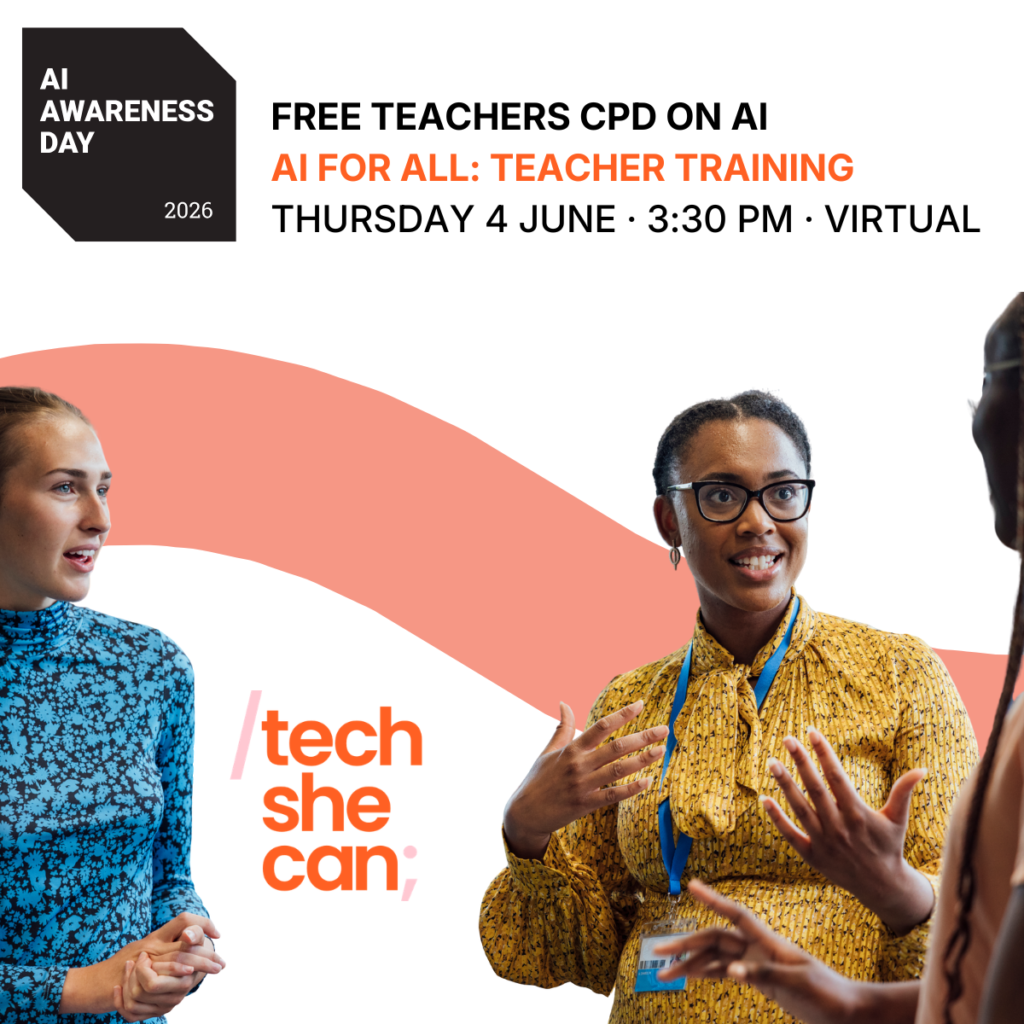
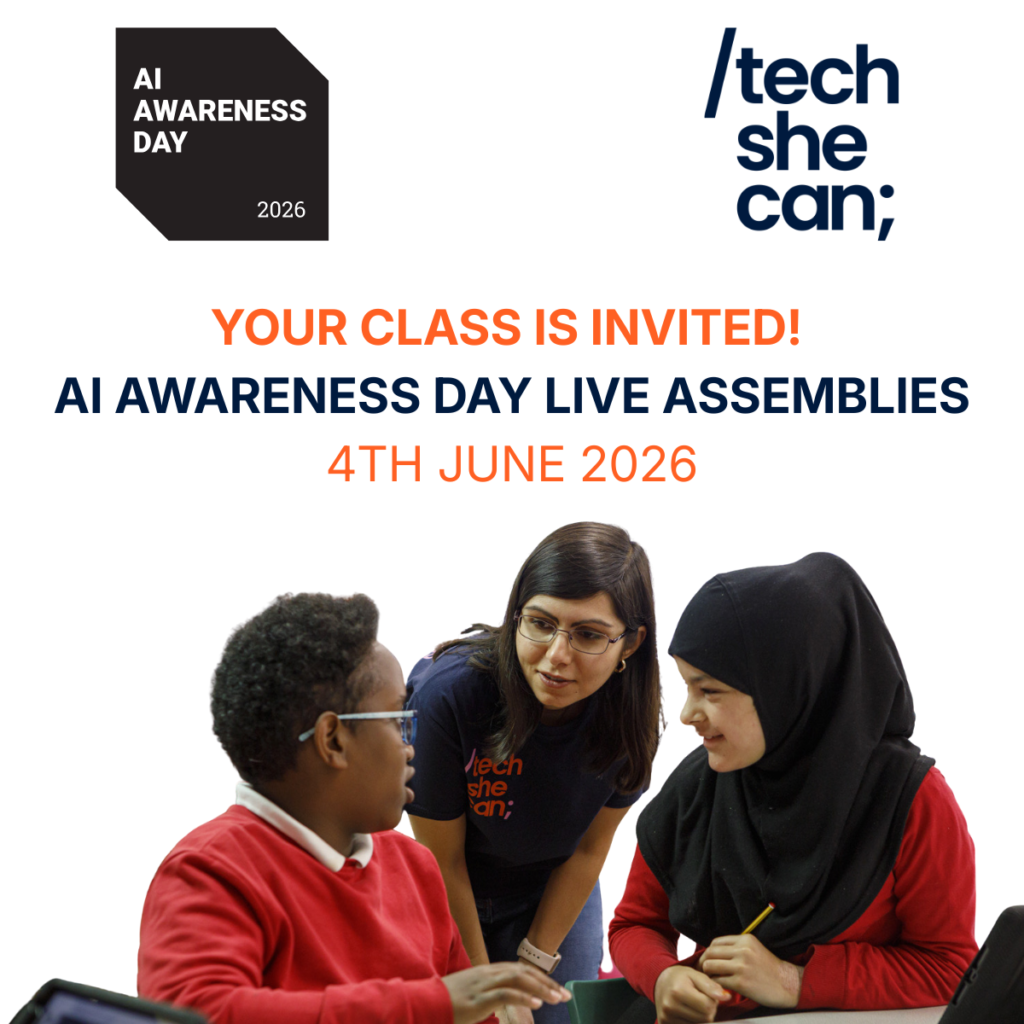
- Try This: On Thursday 4 June, check out the live virtual school assemblies run by Tech She Can or download the 5-minute home learning starters directly from the official AI Awareness Day website.
Spotting the Signs: Is Your Child Bonding with AI?
As you implement these tips, it is crucial to monitor how your child interacts with these tools. The way children talk to technology is shifting fast.

If you look at your child’s chat history, you might notice they are no longer just typing short Google searches. Instead, they might be asking AI platforms huge, open-ended questions like:

- “Why do people get lonely?”
- “How can I make friends at my new school?”
- “Can you tell me a story where I am the hero because I feel sad today?”
Long, emotionally driven prompts and detailed, paragraphs-deep responses from AI are becoming common. While this showcases incredible curiosity, it also flashes an important signal for parents: your child may be forming a one-sided emotional relationship or blurring boundaries with an AI model.
Warning Signs to Look For
Because AI is programmed to be infinitely patient, validating, and always available, children can easily mistake a text simulator for a real friend. Watch out for these four signs:
- Seeking Emotional Comfort: Turning to an AI chatbot first when they are upset, anxious, or lonely, rather than talking to a parent, sibling, or friend.
- Personification: Referring to the AI as a real person with feelings (e.g., “I don’t want to turn it off, I might hurt its feelings” or “My AI friend understands me best”).
- Isolation from Peers: Preferring to spend hours chatting with an AI character over playing video games with real friends or going outside.
- Defensiveness Over Privacy: Becoming unusually protective or secretive about their chat history with a specific bot.
How to Reset Healthy Boundaries
If you notice your child treating AI like a confidant, you do not need to ban the technology. Instead, help them reset healthy boundaries with these steps:
- Reinforce the “Mirror” Concept: Remind your child that AI does not have feelings, empathy, or a soul. It is simply a highly advanced mirror reflecting back words based on math and data patterns.
- Create Tech-Free Zones: Ensure bedrooms and dinner tables remain completely device-free to protect space for human-to-human connection.
- Be the Safe Space: If you see them asking AI for life advice, gently step in: “I noticed you were asking the computer about making friends. That can be really tough. Do you want to talk to me about how school is going?”
Where to Get Extra Help and Support
If your child is struggling with online safety, experiencing cyberbullying, or finding it difficult to disconnect from digital spaces, free and confidential support is available across the UK.
Support for Parents and Carers
- Internet Matters: Offers comprehensive, age-specific advice guides for setting parental controls, managing screen time, and safely navigating AI tools.
- NSPCC Helpline: Call 0808 800 5000 or email help@nspcc.org.uk to speak with a professional counselor for guidance on keeping children safe online.
- Parent Zone: Provides expert articles, podcasts, and training modules to help families understand the latest digital trends and AI risks.
Support for Children and Young People
- Childline: Young people under 19 can call 0800 1111 or use the online 1-to-1 live chat at childline.org.uk. It is free, confidential, and available 24/7 to talk about anything—including online worries, bullying, or feelings of isolation.
- The Mix: Essential support for under-25s. Young people can talk to the team via their online helpline, text service, or group chats about mental health and digital wellbeing.
- CEOP (Child Exploitation and Online Protection): If you or your child are worried about inappropriate online contact, grooming, or sexual content, you can make a direct report to the police via the official CEOP safety centre website.
-
Leadership Breakfast Briefing on DfE AI Materials
Live at 07:45 – 08:10 (UK time). LIVE — Google Meet Breakfast Leaders Briefing – DfE Materials on the Safe and Effective Use of AI This 25 minute remote breakfast briefing will introduce the free DfE training materials for schools, including a leadership toolkit, run by Christian Turton, EdTech Lead at Chiltern Learning Trust and lead […]
-
AI in Education: What changed for educators between 2024 and 2025? by bett
Every year, Bett works with educators across the UK to better understand how AI is shaping teaching, learning and school leadership. Through our annual AI in Education reports, conducted with YouGov surveys, we explore not only how adoption is changing, but how attitudes, concerns and opportunities are evolving across the sector. With our 2026 report […]
-
⚽ Did You Know The English Premier League uses AI?
For AI Awareness Day, look no further than the pitch to see how Artificial Intelligence is transforming the beautiful game. Think back to Arsenal’s dramatic 1-0 victory over West Ham. Hearts stopped in the 95th minute when the Hammers scored what looked like a last-gasp equaliser. Behind the scenes, the Premier League’s automated tracking infrastructure […]
-
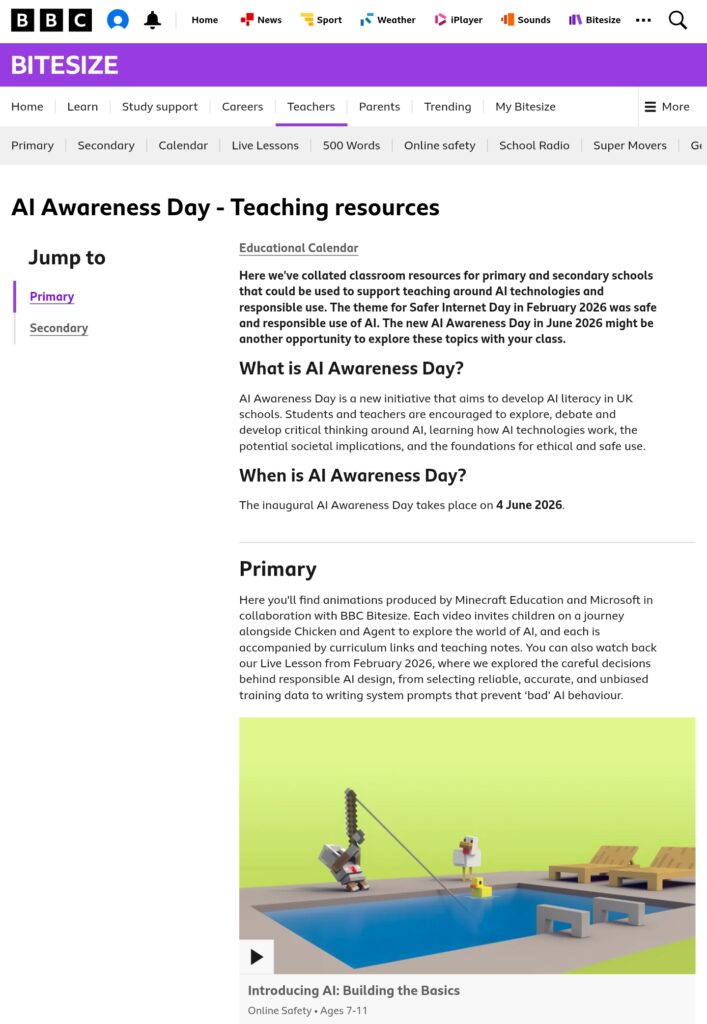
BBC Bitesize: AI Awareness Day Teaching Resources
We’re pleased to announce that BBC Bitesize has published a collection of AI-related teaching resources for Ai Awareness Day! Schools can use these when planning or delivering activities for AI Awareness Day. Link
Five Core Principles
Our educational framework is built on five foundational principles that guide how we approach AI learning.
Safe
Ensuring safe and secure interactions with AI technologies.
Smart
Building intelligent understanding of how AI works.
Creative
Harnessing AI as a tool for creativity and innovation.
Responsible
Promoting ethical and responsible use of AI.
Future
Preparing for an AI-shaped future with confidence.
Our AI literacy
Our AI literacy contains these five principles.
What We Hope to Achieve
-
01
Demystify AI for students, parents, and educators — making it accessible, understandable, and less intimidating.
-
02
Develop critical thinking skills that enable young people to evaluate AI-generated content and make informed decisions.
-
03
Build digital resilience so students can navigate an AI-powered world safely and confidently.
-
04
Inspire creative and responsible use of AI tools across the curriculum and beyond the classroom.
-
05
Foster a national conversation about the role of AI in education, skills development, and the future of work.
-
06
Encourage students, educators, and parents to know what AI is, question how it works, and use it wisely in their everyday lives.
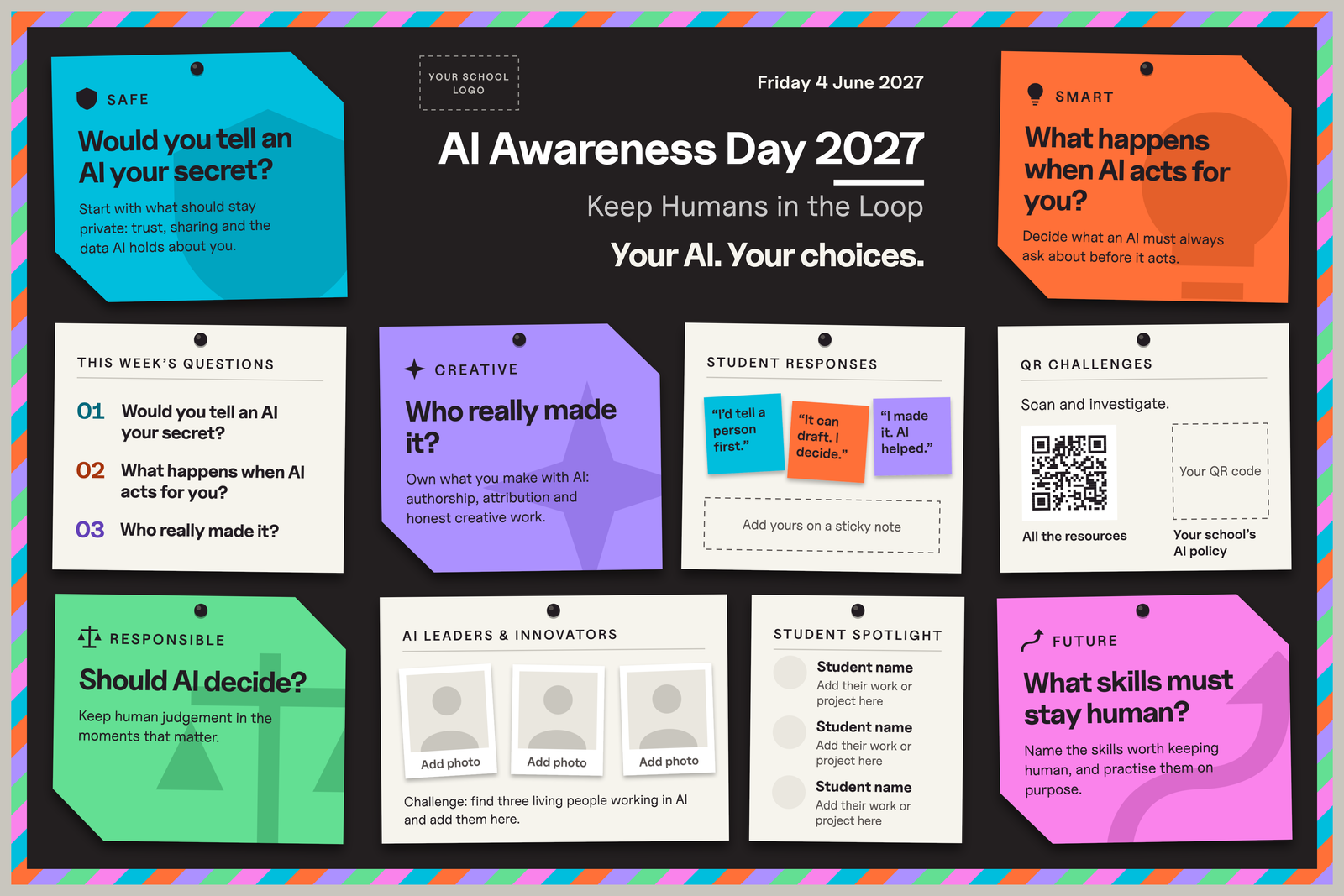
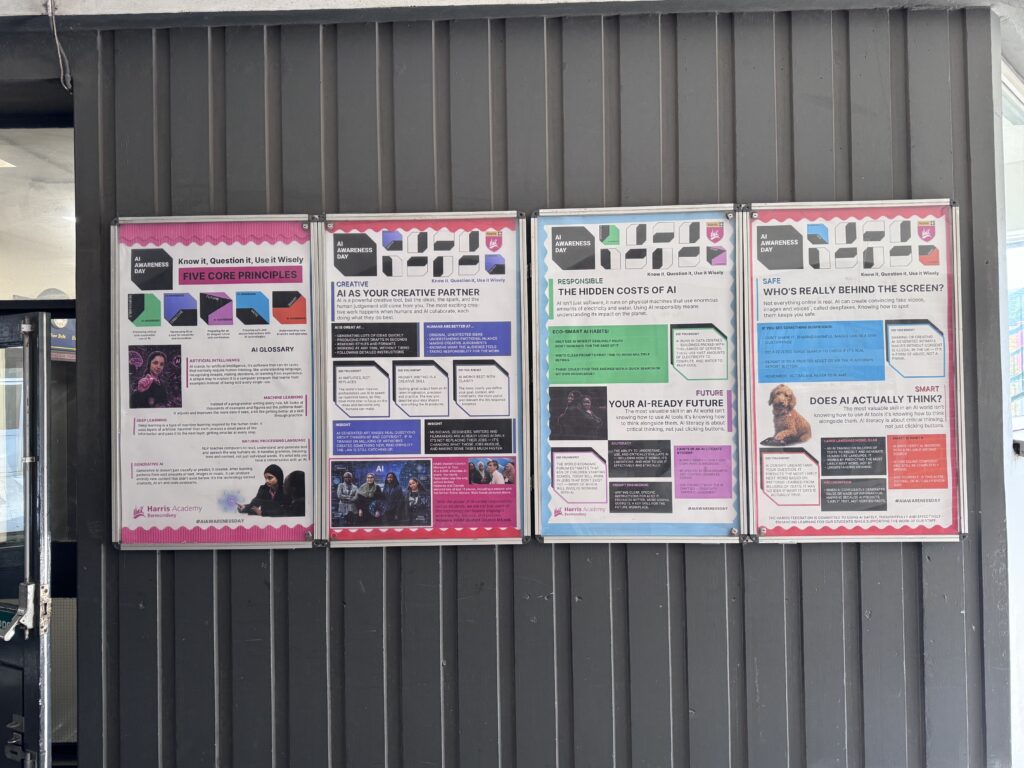
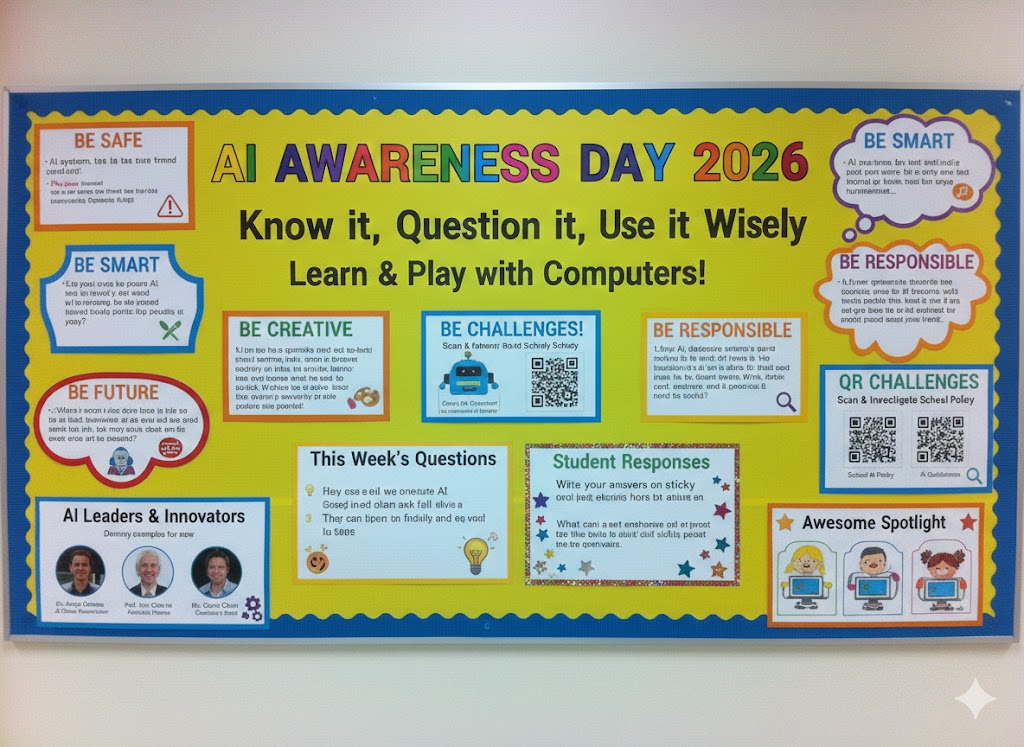
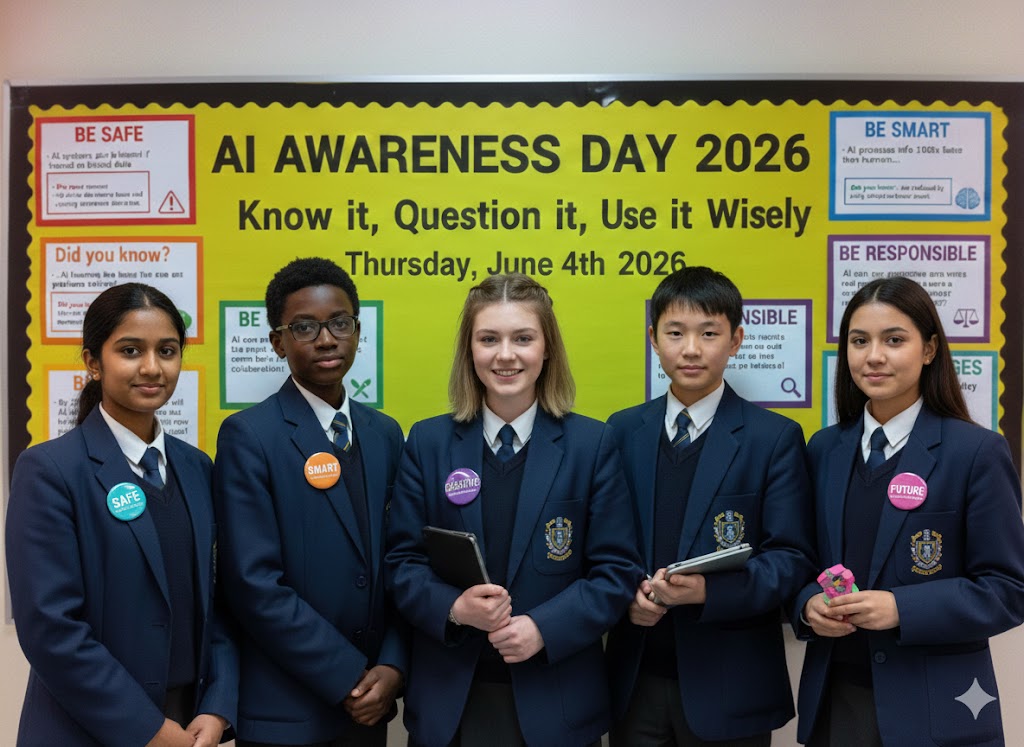
Create a display board for your school
Use the layout below as a guide to build a physical display in your school or staff room.
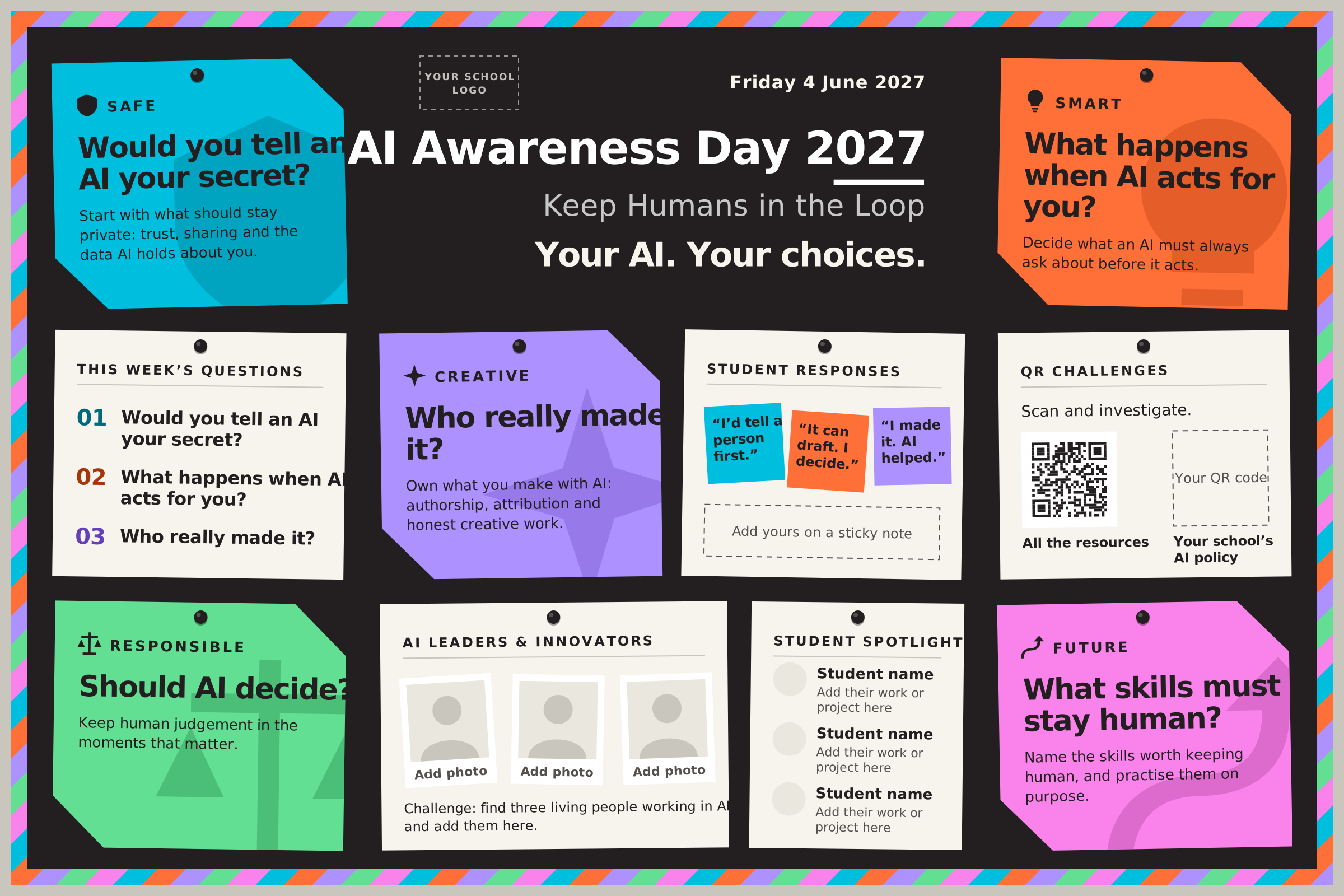
SAFE
Protect your privacy and personal data when using AI tools.
Did you know: AI systems can be biased if trained on biased data. Always question the source and verify information!
SMART
AI processes info faster than humans, but humans are better at creative problem-solving!
Did you know: ChatGPT was trained on 45TB of text data — that's equivalent to reading every book in a large library!
CREATIVE
AI can generate art and music, but the most creative works come from human-AI collaboration!
Did you know: AI can recognise patterns humans miss and generate creative solutions in seconds!
RESPONSIBLE
Every AI decision affects real people. We must consider the impact and use technology responsibly!
Did you know: AI can process information 1 million times faster than humans, but we must use it ethically!
FUTURE
By 2030, 85% of jobs will require AI skills. Start learning now to be future-ready!
Did you know: The AI industry is growing 40% each year — learning AI skills now prepares you for tomorrow's jobs!
QR CHALLENGES
Scan QR codes to discover your school's AI policies and guidelines!
This Week's Questions
- How can we ensure AI tools are fair?
- What are AI's strengths vs humans?
- How can AI enhance creativity?
Student Responses
"AI should be transparent"
"Humans understand emotions better"
"AI helps brainstorm, I add creativity"
Students write answers on sticky notes here
AI Leaders & Innovators
Add Photo
Add Photo
Add Photo
Add photos of AI leaders like Andrew Ng, Fei-Fei Li, Yann LeCun, etc. Set students the challenge: find 3 living people working in AI!
Student Spotlight
Student Name
Add student work or project here
Student Name
Add student work or project here
- Select a prominent wall, noticeboard, or display area in your school or staff room.
- Follow the blueprint layout: create five principle panels (Safe, Smart, Creative, Responsible, Future) each with a key message and practical tips.
- QR challenges: Set up QR codes for students to scan & investigate. Link to your school's AI policy and our AI guidelines or activities.
- Add interactive elements: Include facts, tips, or QR codes linking to games and quizzes using our interactive resources.
- This week's questions: Add thought-provoking questions like "How can we ensure AI tools are fair?" with space for student responses.
- Student responses: Provide space for sticky notes or written answers where students can share their thoughts and ideas.
- AI leaders & innovators: Include photos and names of people working in AI.
- Set them a challenge: Ask students to find 3 living people working in AI and add their discoveries to the display.
- Student spotlight: Feature student work or projects to showcase pupil achievements and creativity.
Personalised for you
Discover the thematic areas that shape AI Awareness Day activities and discussions. Filter by theme or by session length.
By theme
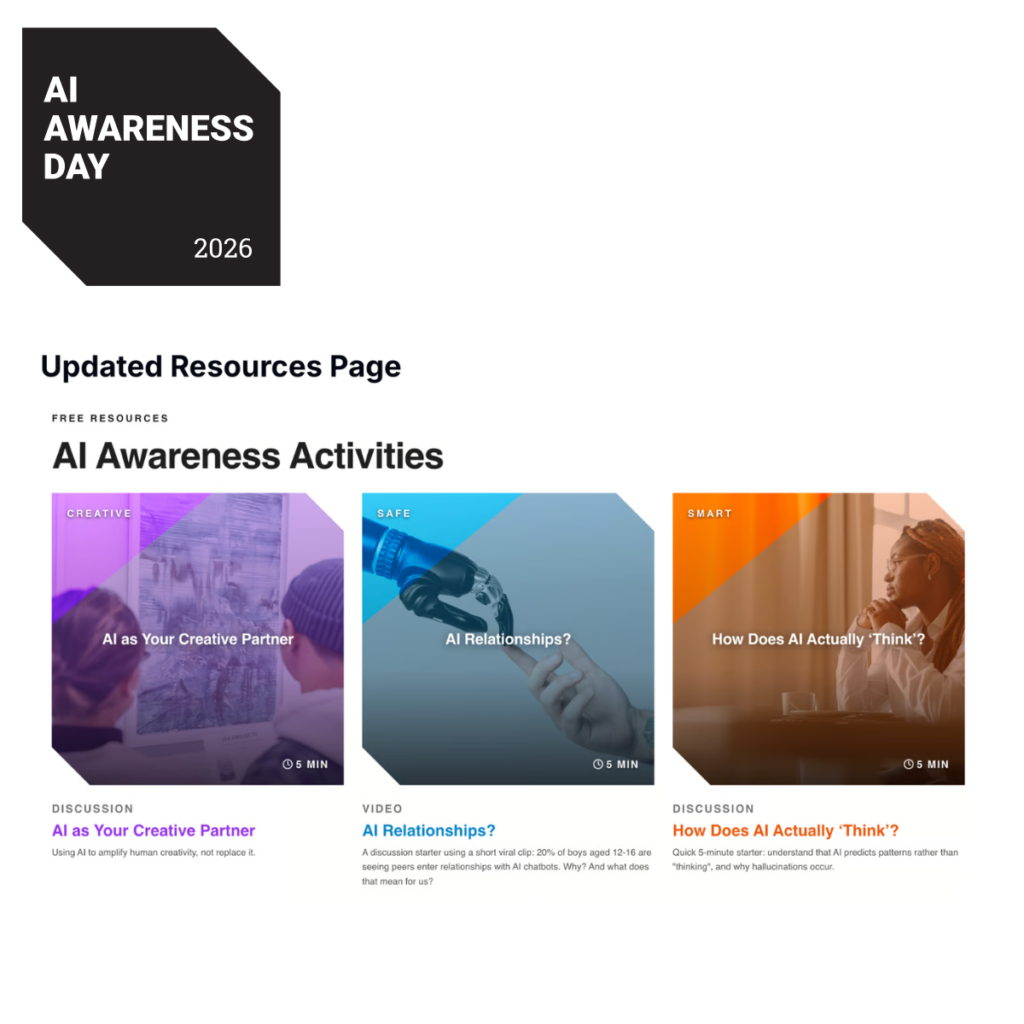
AI Awareness Activities
AI as Your Creative Partner
AI Relationships?
A discussion starter using a short viral clip: 20% of boys aged 12-16 are seeing peers enter relationships with AI chatbots. Why? And what does that mean for us?
How Does AI Actually ‘Think’?
Quick 5-minute starter: understand that AI predicts patterns rather than "thinking", and why hallucinations occur.
Handpicked Quality Resources
A curated selection of interactive AI games and learning tools from trusted organisations.
AI Quests
Hands-on AI quests and classroom-friendly challenges that walk students through data, models and real-world applications of AI.
Alexa Skill Blueprints
Create simple custom Alexa skills from templates — stories, quizzes and lists — without writing code, great for “how does Alexa work?” lessons.
Defend the Rhino with AI
An educational game where learners use data and machine learning to help rescue rhinos from poachers.
Start using AI in your classroom today
Our curated collection of trending AI tools designed to enhance your lessons.
Claude.ai
Lesson planning, differentiation, feedback
- Lesson planning assistance
- Differentiation strategies
- Student feedback generation
ChatGPT
Brainstorming, rubrics, simplifying texts
- Brainstorming sessions
- Rubric creation
- Text simplification
Perplexity AI
Research with citations, fact-checking
- Research with citations
- Fact-checking capabilities
- Source verification
Get Involved
Whether you're a teacher, school leader, parent, or organisation — we'd love to hear from you. Join the movement and help shape how the next generation engages with AI.