Guest post by Phil Wickins, a primary computing specialist, Senior Professional Development Leader for STEM and former NCCE National Specialist for Primary Computing Leaders.
In short:
- Almost any task has three stages: thinking, doing and evaluating.
- When AI is involved, humans should keep control of at least two of them.
- The real learning comes when pupils argue about which two, and why.
For AI Awareness Day, I want to share my 2 Out of 3 Principle, a simple idea that I think could change how we teach children to approach artificial intelligence. It asks them to think about when, why and how they use AI, rather than simply whether they should. It applies just as much to adults.
Who’s actually doing the thinking?
The theme for AI Awareness Day 2027 is Keep Humans in the Loop, and it raises an important question for anyone in education. As AI becomes more capable of supporting, speeding up and even completing tasks for us, how do we make sure children remain active participants in their own learning?
AI tools promise to generate ideas, write content, create images and give instant feedback. For teachers, that can mean less workload. For pupils, finishing in seconds what might otherwise take a whole lesson is a real temptation.
I wonder whether we spend too much time on what AI can do, and not enough on what we should keep doing ourselves. If a pupil uses AI to come up with the idea, produce the work and judge the result, what have they contributed, and more importantly, what have they learnt? This is where my 2 Out of 3 Principle comes in.
Introducing the 2 Out of 3 Principle
Most tasks, projects and creative activities, however complex, can be broken into three broad stages, each needing a different kind of thinking:
- Thinking: planning, researching, questioning, exploring possibilities and generating ideas.
- Doing: creating, writing, building, experimenting or putting ideas into practice.
- Evaluating: checking, reviewing, testing, editing, reflecting and working out how to improve.
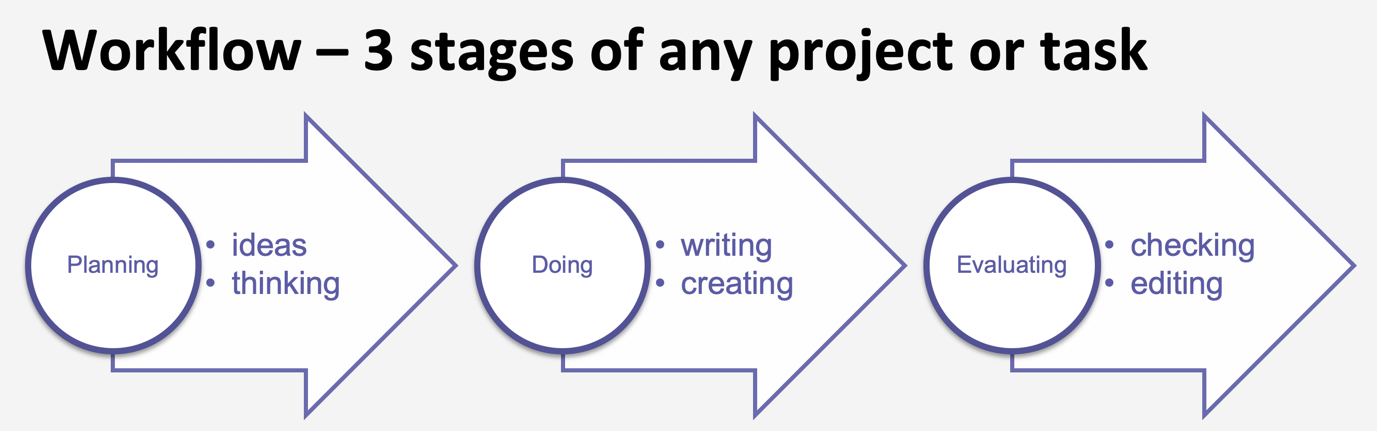
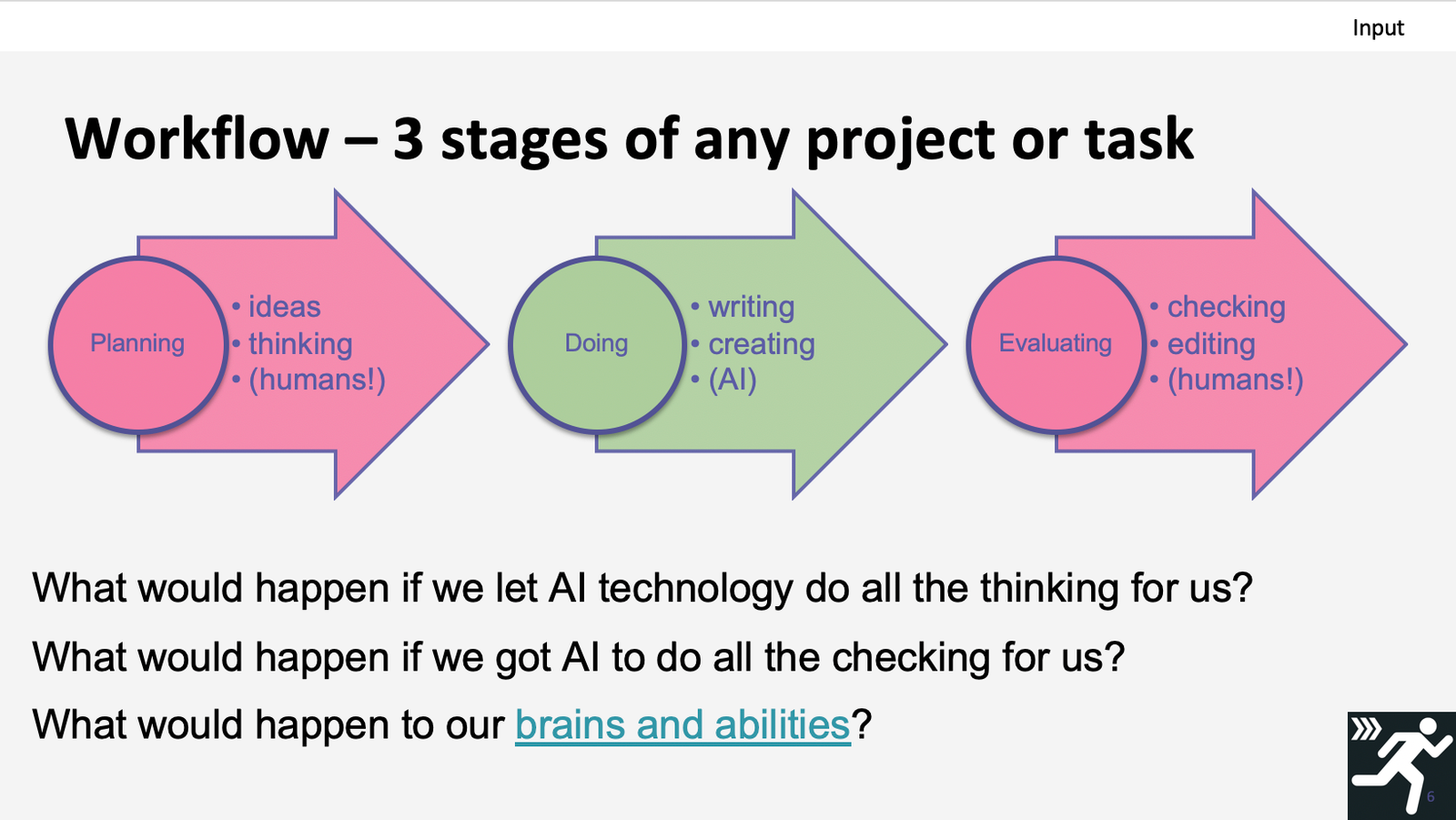
My argument is that whenever AI is involved in a task, humans should keep control of at least two of these three stages.
That doesn’t mean AI can only be used for a third of a project, or that the stages take equal time. It is a way of deciding where AI genuinely helps without slowly giving away the thinking, creativity and judgement that make the activity worth doing. Instead of “Can I use AI for this?”, children ask: “Which part of this task would benefit from AI, and which parts should stay my responsibility?” It’s a relatively simple distinction, but one that could fundamentally change the conversations we’re having in classrooms.
Three ways to approach the same task
Imagine a pupil has been asked to write a persuasive piece about protecting the environment, and has access to a suitable AI tool. Under the principle, there are three ways to approach it.
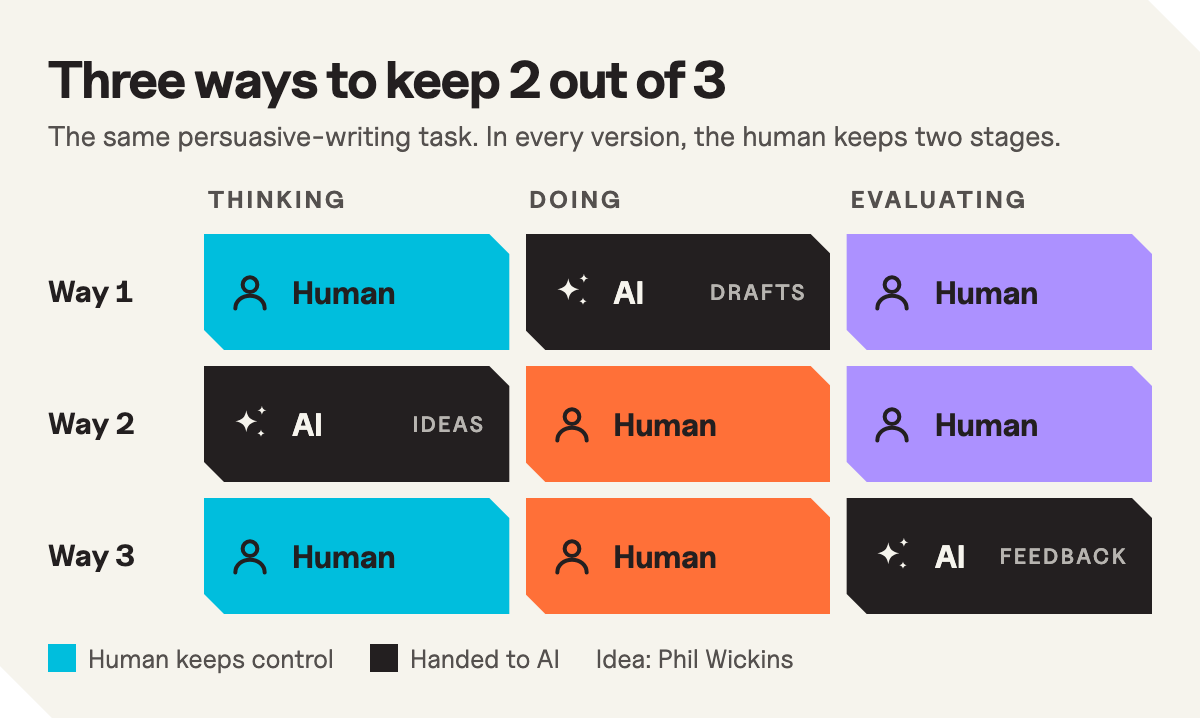
1. Human thinks, AI does, human evaluates (my recommended approach)
The pupil does their own research, develops a clear argument and plans the structure, then asks AI to write a first draft based on those decisions. They then examine the draft closely: checking the accuracy of any claims, asking whether the language says what they mean, and making changes. AI takes on some of the production, but the direction, purpose and final judgement stay with the pupil.
2. AI thinks, human does, human evaluates
Here the pupil uses AI to explore the issues, suggest possible arguments or offer perspectives they hadn’t considered. Having questioned those ideas and chosen the ones to pursue, they write the piece themselves, then review, edit and improve it. AI provides a starting point, not a finished product.
3. Human thinks, human does, AI evaluates
The pupil plans and writes everything independently, then asks AI for feedback against agreed success criteria. They weigh up the suggestions, use the helpful ones and challenge the ones they disagree with, rather than accepting every change because it came from an AI. This version teaches something extra: AI feedback isn’t automatically right, and evaluating the evaluation is part of learning too.
In each case AI has a legitimate role, but the pupil remains responsible for the task and its outcome.
AI oracy, not just AI literacy
There is a risk that we shrink AI literacy to technical skills: writing prompts, spotting AI-generated content, or using whichever tools are popular this year. Those skills matter, but they are only part of what children need.
We should also develop their AI oracy: the ability to explain, question, debate and justify decisions about AI, including when to use it, when not to, and why. With speaking and listening set to sit alongside reading and writing in England’s curriculum (see our article on oracy and AI Awareness Day), this is a natural fit. Children should be able to build arguments that go beyond “AI is good” or “AI is bad”.
The principle is a good starting point because it doesn’t prescribe one right answer. It invites children to think about the purpose of the activity. For example, you might ask pupils:
- If AI generates all your ideas, have you really been creative?
- Is using AI to write something really different from using it to check something you wrote yourself?
- Should AI be allowed to judge your work if you don’t understand the subject well enough to challenge its feedback?
- Would you hand over a different stage for a maths investigation, a story or a product design?
- If AI does a task better than you could, does that automatically make using it the right decision?
- Could you follow the 2 Out of 3 Principle and still miss something important you were meant to learn?
That last question matters most, because I don’t want the principle to become another rule children follow without understanding why. A pupil might fairly argue that letting AI write a persuasive piece defeats the point of a lesson on persuasive writing, even if they planned and checked it. They would be right, and that is exactly the discussion I want. The principle supports critical thinking; it doesn’t replace it.
For teachers: are we teaching the process or assessing the product?
AI is a good reason to look again at the difference between the process of learning and the finished product. When we set a task, do we care most about what children produce, or about what they learn while producing it?
If the aim is to develop a pupil’s ability to build a persuasive argument, handing the writing to AI may undermine the lesson. But if the aim is to judge how accurate and effective persuasive language is, an AI-written example can be useful material to analyse, challenge and improve. The difference lies in knowing what we want children to learn before deciding how AI should be involved.
Try splitting an existing activity into thinking, doing and evaluating. Which parts are essential to the learning, and which could AI reasonably support? Could pupils debate the best stage for AI before they start? Could two groups use AI at different stages, then compare what they made and what they learnt? The decision itself can become part of the lesson.
For school leaders: beyond permission and prohibition
New AI tools appear faster than policies can keep up, so it is tempting to rely on lists of approved tools and banned activities. Safeguarding, data protection and clear boundaries are essential, but on their own they won’t prepare children to decide well for themselves.
We need to establish a shared understanding of what meaningful human involvement looks like, and the 2 Out of 3 Principle could give staff and pupils a common language for it across subjects. I’d encourage leaders to consider whether their AI strategy focuses only on what people are allowed to do, or whether it also builds the knowledge, judgement and confidence to decide well. Are teachers given time to explore these questions together, challenge assumptions and agree an approach that suits the age and experience of their pupils? And are children part of the conversation, or simply told about decisions adults have already made?
For all of us: apply it to your own work
I developed this with pupils in mind, but it fits adults just as well. Think about the last time you used AI to plan a lesson, draft a letter or make resources. Which stages did you keep, and which did you hand over?
Using AI for ideas, speed or feedback is perfectly reasonable, but notice the point where support becomes substitution, especially where your professional judgement is what makes the work good. If we want children to be critical users of AI, we need to show them what that looks like: questioning an output, rejecting a suggestion, or deciding a task is better done without AI at all.
Before children use AI, they need to understand it
My wider concern is that we are bringing more and more sophisticated AI into children’s lives without always giving them the chance to understand it first. Before pupils use AI tools themselves, I think they should be asking:
- What is AI, and what isn’t it?
- What does it actually do, and how does it work?
- How can we use it safely, ethically, responsibly and well?
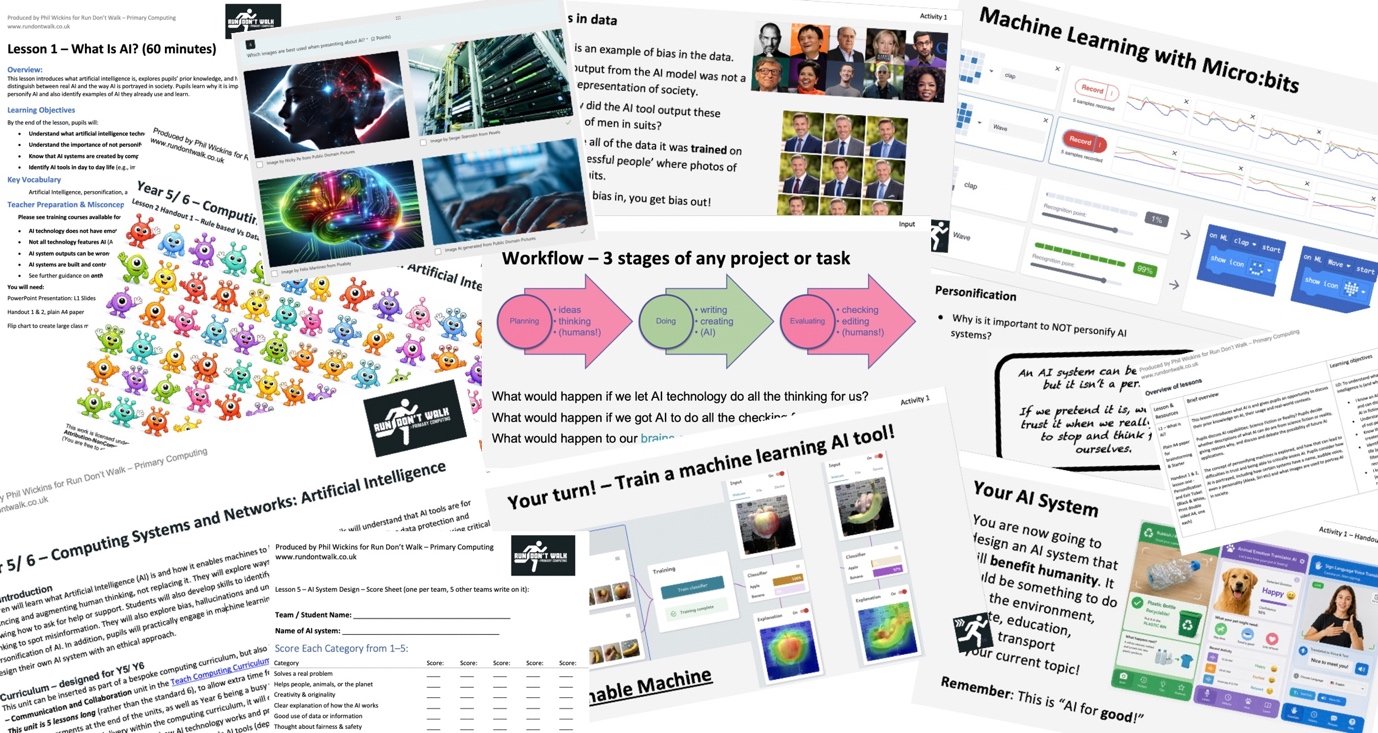
Those questions shape a five-lesson AI unit I have written for Key Stages 2 and 3, which schools can use free of charge. It introduces the thinking, doing and evaluating workflow and the 2 Out of 3 Principle as a way to talk about keeping real control when working alongside AI.
Tell families first. Parents understandably have questions about children and AI. The letter I suggest schools send home before the unit makes two things clear. The aim is to help children understand “what AI is, what it isn’t, what it can and cannot do”, and pupils will not be using chatbots such as ChatGPT to generate their own work. I have written more about communicating with parents about AI learning.
Keeping humans in the loop takes more than hands on the keyboard
I don’t think the most important question in education is how much AI children should be allowed to use. It is how we make sure they keep developing the ability to think independently, make informed decisions and take responsibility for their work, in a world where capable tools can do so much for them.
The 2 Out of 3 Principle isn’t the answer to every situation. Some tasks shouldn’t involve AI at all; others can use it across several stages without harming the learning. What it offers is a starting point for a conversation we urgently need, one that lets children question AI rather than simply accept or reject it. I would love to see pupils challenging the principle, debating its limitations and defending their own approaches to using AI. Being able to explain why you chose to use a technology is arguably worth more than knowing how to use it.
Try it this week:
- Take one task and split it into thinking, doing and evaluating.
- Ask pupils which two stages humans should keep control of, and why.
- Rather than telling them whether they’re right or wrong, encourage them to debate it.
Keeping humans in the loop shouldn’t only mean keeping control of the finished product. It should mean we are still growing the minds that can question it, create it and judge it in the first place.

About the author. Phil Wickins is an independent primary computing specialist who coaches and trains teachers and subject leaders in UK and international schools. He is a Senior Professional Development Leader for STEM and a former NCCE National Specialist for Primary Computing Leaders. His free five-lesson AI unit for Key Stages 2 and 3 is on his site, Run Don’t Walk, an AI Awareness Day partner.