
AI Awareness Day 2027 Humans in the Loop
The National AI Conversation
A national conversation about AI, led by young people. Question it. Challenge it. Debate it.
- Opens
- 1 January 2027
- AI Awareness Day
- Thursday 29 April 2027
Schools can register from 1 January 2027Check your AI readiness
Bigger than a single awareness day
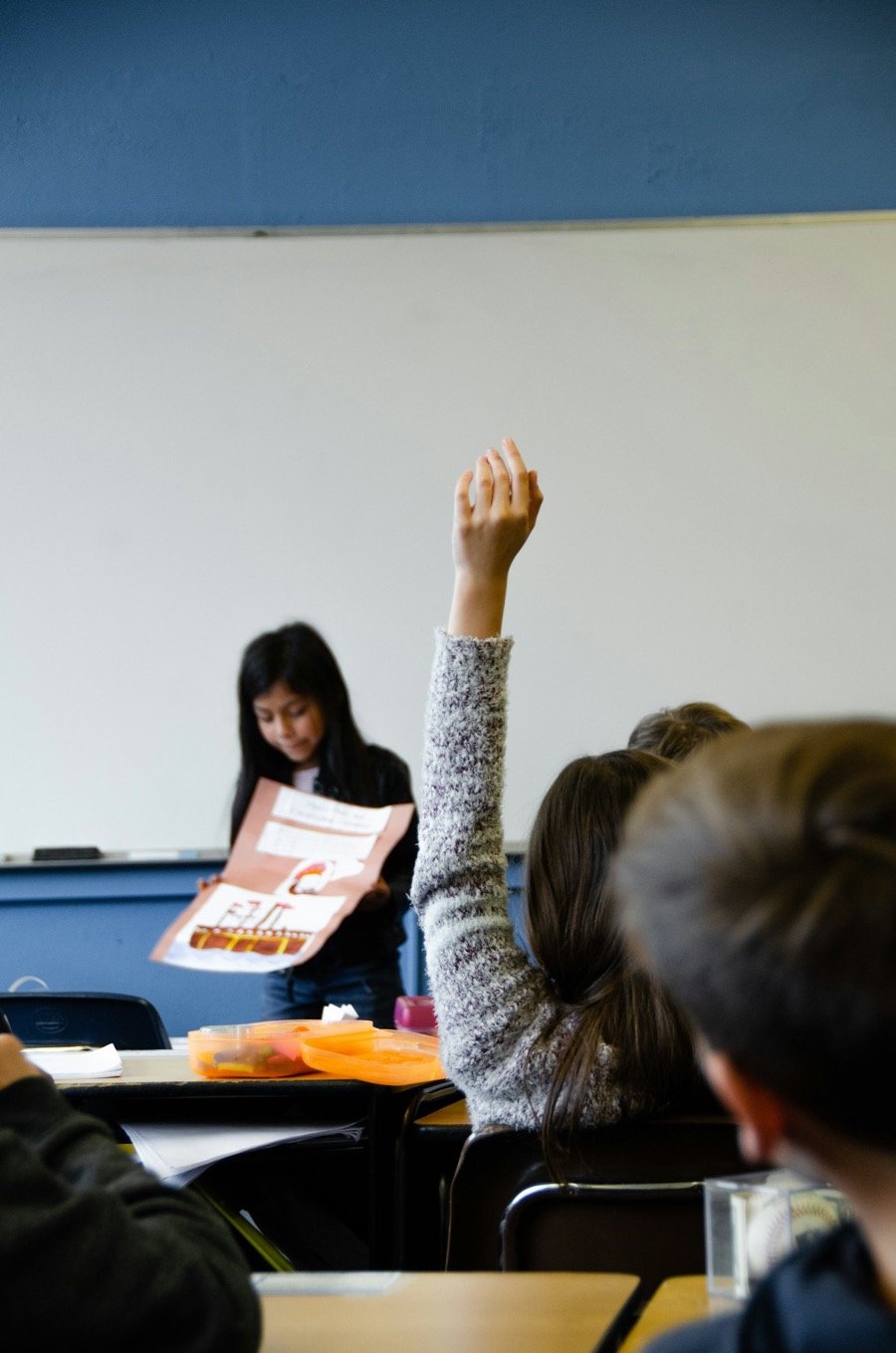
From 1 January 2027, schools can question, discuss and debate the role AI should play in their lives and futures, building up to AI Awareness Day on Thursday 29 April 2027.
Young people will not simply be taught about AI. They will listen to different perspectives and form their own judgements.
Every student’s journey
- Learn
- Think
- Discuss
- Rebut
- Reflect
The skills we want young people to build in the age of AI
- Oracy & Communication
- Developing fluent spoken language, confidence and the ability to articulate complex ideas.
- Public Speaking
- Being articulate and exploring technical concepts in front of an audience.
- Critical Thinking
- Evaluating arguments logically and spotting cognitive biases.
- Information Literacy
- Critically examining evidence, identifying bias and verifying facts.
- Conflict Resolution
- Learning how to resolve conflict in pressured situations.
- Active Listening & Empathy
- Engaging deeply with other people’s viewpoints and responding respectfully.
- Independent Judgement
- Forming personal convictions backed by reasoning rather than peer pressure.
- Civil Discourse
- Learning to defuse playground or real-world tension by adapting tone and voice to solve problems together.
It is designed to be easy to join. Start with five minutes in a lesson, or connect with another school for a structured debate. Nobody needs an account or a password. Maximum participation. Minimum administration.
The technology connects the conversation. Young people do the thinking.
Find your pathway
Every school gets one school code. Students add a class PIN; adults add their own email address and a six-digit code we send them. Nobody has a password.
-
Teachers
Lead the conversation in your school
- Register your school and name the headteacher or senior leader who will approve it.
- Once they approve, put the class PIN on the whiteboard and start a debate.
- Invite a school you know, or find one on Join the conversation.
- Use the prep pack, hold the debate, and collect the result and certificate.
Colleagues with your school email address join straight away. Anyone else is approved by the lead teacher.
-
Headteachers and senior leaders
One click to say yes
- You get one email when a teacher registers your school.
- Approve with one click. Nothing goes live until you do.
- Decide whether the organisation that introduced your school is told.
- Sign in any time with the school code and your own email.
-
Students
No names, no accounts
- Scan the QR code on the whiteboard, or type the school code and the class PIN.
- Answer a few anonymous questions about AI before the debate.
- Take a role: speaker, note-taker, questioner or survey presenter.
- Vote before and after, and see whether the room changed its mind.
-
Judges
Invited by a teacher
- A teacher at the host school invites you by email. There is no open call.
- Agree to follow the host school’s safeguarding and visitor rules.
- Score on your phone or on a printed scorecard. Your submission is the result.
- Choose whether your name appears on the public result.
-
Organisations that support schools
Encourage your schools, don’t enrol them
- Tell the schools you work with. Each registers and confirms its own place.
- A school can name you when it registers, or you can nominate a school.
- If its headteacher agrees, you get a dashboard of totals by emailed link.
-
MATs (multi-academy trusts)
From academy to academy
- Each academy registers and is approved by its own headteacher.
- Hold debates between your own academies, then connect beyond the MAT.
- Ask the programme team for a report of your academies taking part.
Five themes, one conversation
-
Safe
Privacy, security, trust, memory, bias and protection.
-
Smart
Learning, reasoning, verification, critical thinking and dependence.
-
Creative
Creativity, authorship, originality, ownership and imagination.
-
Responsible
Accountability, fairness, sustainability, permission and consequences.
-
Future
Jobs, skills, opportunity, human agency, society and young people’s role in decisions.
Three ways to take part
-
Classroom Conversation
The lowest barrier in. Five-minute starters, questions and free resources to get a class talking about AI.
-
School Debate
Class against class, house against house or year against year. Build confidence inside your own school first.
-
National Debate Network
Connect with another school for a structured, judged inter-school debate, in person or online.
Each works at primary, secondary and post-16, with questions pitched for the age. See how each age debates
One conversation, pitched for every age
Primary, secondary and post-16 students debate the same five themes. What changes is how the question is asked, how they prepare and how the debate runs. Here is one idea from the Safe theme, what AI should remember about you, as each age meets it.
-
Primary
Mainly Years 5 and 6
The question
“Your AI helper can remember things about you. Should it remember everything, some things or nothing?”
Help to get going
A sentence starter on display: “I think it should remember ___ because ___.”
How students take part
Pupils move to a corner of the room or vote with a show of hands, then tell a talk partner why.
The survey beforehand
A class vote or tally chart, with the teacher helping.
Research
Short fact cards, one fact to a card.
On the day
Shorter speeches, with more time for questions from the floor and the final vote.
-
Secondary
Years 7 to 11
The question
“An AI assistant remembers your conversations to give you more personal support. How much should it remember, and who should decide?”
Help to get going
A “What if…?” challenge card: “What if remembering more helped it notice when you were struggling?”
How students take part
Small groups with talking roles, Builder, Challenger and Summariser, then the challenge card tests their view. Shorter for Key Stage 3.
The survey beforehand
A short online form sent to a year group.
Research
Two or three sources they are given, plus one they find for themselves.
On the day
Three-minute opening cases, two-minute rebuttals, and questions from the floor.
-
Post-16 and FE
Sixth form and college
The question
“This house believes users, not companies, should control what AI remembers about them.”
Help to get going
The central tension, personalisation against privacy, and a research prompt: how does the ICO’s Children’s Code treat data about young people?
How students take part
A formal debate, with points of information offered during the opening speeches.
The survey beforehand
Students write their own questions and note the limits: sample size and leading wording.
Research
Independent research, with a note of how reliable each source is.
On the day
Longer opening cases, and a show of hands or a digital vote at the end.
Every age has the same 30 minutes and is judged on the same four things, in simpler words for primary, and every theme has a question written for each age. The questions, timings and wording are being reviewed by debate educators before the conversation opens.
Inside a debate
About 30 minutes, and the whole class takes part, not just the speakers.
-
10 min
Setting the scene
A welcome, an opening vote from the room, and what the survey found.
-
20 min
The debate
Opening cases, time to prepare rebuttals, rebuttal, questions from the floor, closing speeches and a final vote.
A role for everyone
Each school gets a prep pack: a checklist, a short survey to run two to three weeks before with the same questions in both schools, research in three groups, and roles for a class of about 30.
Judged on four things
Argument Evidence Rebuttal Delivery
Each is scored from 1 to 5. The criteria are the same at every age, in simpler words for primary.
Several sources for every fact. Don’t rely on AI-generated content: it can be wrong.
The running order is a recommendation, not a rule, so schools can fit it to their setting and their students.
How an inter-school debate works
Identify your school once. We take care of the rest.
It should feel more like arranging a school sports fixture than registering for another complicated education platform. It is not a learning management system, a pupil social network or a heavyweight competition platform.
Headteacher approval comes first
Every school taking part, including the one you invite, is approved by its headteacher or a senior leader before anything goes live. They get one email and approve with one click. Until then a school cannot run a class PIN for students, start or join a debate, or see Join the conversation. If the email is missed, the lead teacher can send it again.
-
Register your school
A teacher gives their name, role and school email, and names the headteacher or senior leader who approves the school with one click. Nobody gets a password.
-
Get a Debate ID
Every debate has its own reference, for example AID-7K42P, that both schools and the judge use.
-
Invite another school
Send an invitation by email or share a link. No opponent yet? Join the conversation shows schools in your region, or online, looking for a debate. The school you invite registers and is approved by its own headteacher, and the match is made once both schools are approved.
-
Agree the fixture
Choose the date, online or in person, the theme, motion and a judge. Both teachers receive the Debate & Safeguarding Pack automatically, and calendar entries carry the directions or the meeting link.
-
Hold the debate
The judge scores on a phone or on a printed scorecard, because not every venue has reliable Wi-Fi. The judge’s submission is the official result.
-
Be recognised
Taking part is recorded straight away. Two debates against two different schools earns the National AI Debate School certificate.
One Debate ID. Two school leads. One judge. One result.
If a step stalls, we send reminders after 3 and 7 days. A debate with no action for 14 days expires, and the school can invite another.
Schools stay in charge
The platform connects schools. Each school remains responsible for its own safeguarding, supervision, travel, parental permissions, risk assessments and visitor arrangements.
When two schools are matched, both teachers automatically receive our Debate & Safeguarding Pack to help them prepare.
Every debate has an independent judge, such as a professional, technologist, academic or community leader. Judges are invited by the host teacher, never through an open call, and the host school’s own visitor procedures apply.
If something goes wrong, either school can report it: a cancellation, a conduct or safeguarding concern, or a result that does not reflect what happened. Both schools’ senior leaders are told, the result is held, and the report stays private. Schools resolve it under their own procedures.
Recognising taking part, not only winning
1
completed inter-school debate
Participation recorded
2
completed debates against two different schools
National AI Debate School certificate
The programme rewards conversation, connection and breadth: the schools you meet, the students involved and the themes explored. MATs and regions can run competitive events of their own, but there is no national league table of winners.
Results are public: both schools, the theme, the motion, the date, the result and, if they agree, the judge’s name. Teachers’ names and anything about students are never published. Every certificate carries a reference that anyone can check.
Whole MATs and communities can join in
Classroom School School to school MAT Region National
A multi-academy trust (MAT) can hold debates between its own academies before connecting with schools elsewhere. Each academy registers and is approved by its own headteacher, and the programme team can share a report of the MAT’s academies taking part.
For organisations that bring AI into schools
Take learning beyond the resource.
If your organisation supports schools with AI lessons, resources or programmes, this is the natural next step: students put what they have learned to work, testing their thinking against peers from another school, in front of an audience and an independent judge.
-
Encourage your schools
Tell the schools you work with. Each registers itself and is approved by its own headteacher: one school never signs up another, and neither do you.
-
Be named, with permission
A school can name your organisation, and a person there, when it registers, and its headteacher decides whether you are told. Or nominate a school you work with, and we send it one invitation.
-
Lend your expertise
Your people can judge a debate when a teacher at the host school invites them. There is no open call for judges.
-
See the difference, not the data
If a headteacher agrees, you get a dashboard by emailed link, with no account: schools, debates, judges and students reached, and Student Voice by age group once three schools have answered. No school, teacher or student is named.
Whoever brings a school along, the school always confirms its own place. Every email to an organisation lets it stop the emails, or say “this wasn’t us”.
Interested in supporting the national debate?
Don’t hesitate to reach out to us. A few partnership places remain for organisations that want to help with:
- Powering the platform that hosts the debates
- Keynote talks from technology companies at debates and events
- Guest speakers for schools serving disadvantaged communities
- Hosting debates and events for those schools
Partners support the programme, not individual schools. They never see schools’, staff or students’ details, and guest speakers visit under each school’s own visitor procedures.
Everyone has a part to play
-
Young people
AI is changing your future. You should have a say in it. Question it. Challenge it. Debate it.
-
Teachers
Start a meaningful conversation about AI without adding hours of administration.
-
Headteachers
Give your students a voice in one of the biggest conversations shaping their future.
-
MAT leaders
Turn individual school conversations into one powerful network-wide conversation about AI.
-
Parents and carers
Young people need opportunities to think critically about AI, not simply use it.
-
Organisations that work with schools
Take learning beyond the resource: help schools apply what they have learned, challenge one another and contribute nationally.
-
Employers and technology organisations
Don’t just tell young people about the future of AI. Listen to them.
-
Professionals and community leaders
Give young people your attention, not a lecture.
Judges are invited by a teacher at the host school, never through an open call.
-
Policymakers and researchers
Listen to what young people are actually saying about AI, through structured insight that is properly governed.
The timeline
-
Now to December 2026
Getting ready. The platform is tested with a first group of schools while resources and safeguarding guidance are written.
-
1 January 2027
The National Conversation opens. Schools can begin classroom conversations, Student Voice activities and debates.
-
January to March
School debates, inter-school debates, MAT activity and Student Voice.
-
April
Final debates, local and regional events, and the first national findings taking shape.
-
Thursday 29 April 2027
AI Awareness Day: Humans in the Loop. The national culmination, with the most engaged schools, the national findings and a flagship debate.
Questions schools ask
Do students need an account?
No. Students scan a QR code and enter a class PIN. They give no name and create no account.
Do we need our headteacher’s approval?
Yes. Every school is approved by its headteacher or a senior leader before it can run a class PIN, start or join a debate, or use Join the conversation. It takes one click from one email, and the lead teacher can send the email again if it is missed.
Can more than one teacher at our school take part?
Yes. Colleagues with the school’s email address join straight away; anyone else is approved by the lead teacher. Every debate counts towards one school total and one certificate.
Do teachers need a password?
No. Teachers, headteachers and judges sign in with their school code and their own email address, and we email a six-digit code.
Can we take part without another school to debate?
Yes. Classroom Conversations and School Debates need only your own school, and Join the conversation helps you find a school for an inter-school debate.
Can we debate online?
Yes. The host school uses its own video platform and adds the meeting link, so it is on the debate page on the day. The safeguarding pack asks both schools to confirm that the host controls who joins and that nobody records the debate.
Who is responsible for safeguarding?
Each school, under its own policies. The platform connects schools and gives every teacher a checklist; it does not replace a school’s own procedures.
What happens to our details?
Names and email addresses of teachers, headteachers and judges are deleted after the campaign ends on 31 August 2027, or sooner if you ask us. Student answers are anonymous. Totals and results stay, without anyone’s contact details.
Ready to start the conversation?
Schools can register from 1 January 2027. Until then, see how ready your school is for AI.